Occasional Papers
Marquesan artefacts, and the queen's tattooed hand
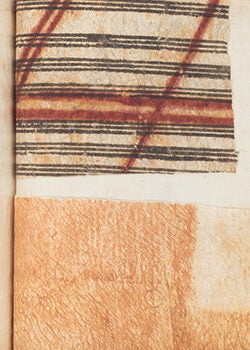
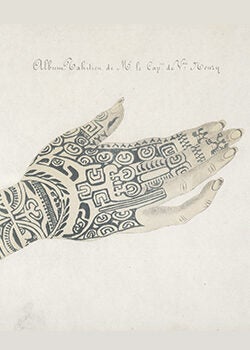
Charles Noury (1809-1869), a French naval officer born in Nantes, spent a number of years on service in the Pacific where he was entranced by the Marquesas islands. Years later, in his retirement, he studied and shared his collection of Pacific and especially Marquesan artefacts, and his Album Polynésien, an extremely rare and beautiful illustrated description of these and of observations that he made there, was published in Nantes in 1861. Among the wonderful depictions of artefacts the most beautiful of the images is that of the tattooed hand which, particularly graceful and beautiful, has spawned a small literature of its own since it depicts the famous tattoos of Queen Vaekehu (1823-1901). The tattoos were by different artists from the island of Ua Pou, home of the best tattooists in the archipelago, and they were done so well and so similarly that they appeared the work of one artist. The queen was quoted elsewhere as saying “Oh I suffered cruelly. I cried much… For several days my hands stayed large as breadfruits. It was in vain that I asked my mother to put an end to my suffering. All was useless. It was necessary that the tattooing of my hands and arms to my shoulders, of the feet and the knees, of the mouth and the ears, reveal my noble origin…"
Andrea Corsali & the Southern Cross
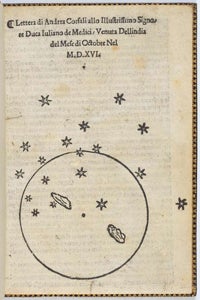
In 1515 Andrea Corsali, an Italian under the patronage of the Medici family, accompanied a Portuguese voyage down the African coast and around the Cape of Good Hope, en route to Cochin, India. On his return Corsali's letter to his patron describing the voyage was published. It included the earliest illustration of the stars of the Crux, the group of stars known today as the Southern Cross. The context of his remarkable discovery is explored here in an essay by Anne McCormick, prepared as a continuation of her study "The Book in the Renaissance" at the London Rare Book School, University of London, 2019.
Edward Ashworth, Artist & Architect
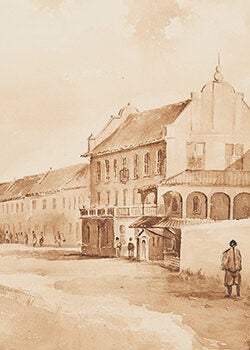
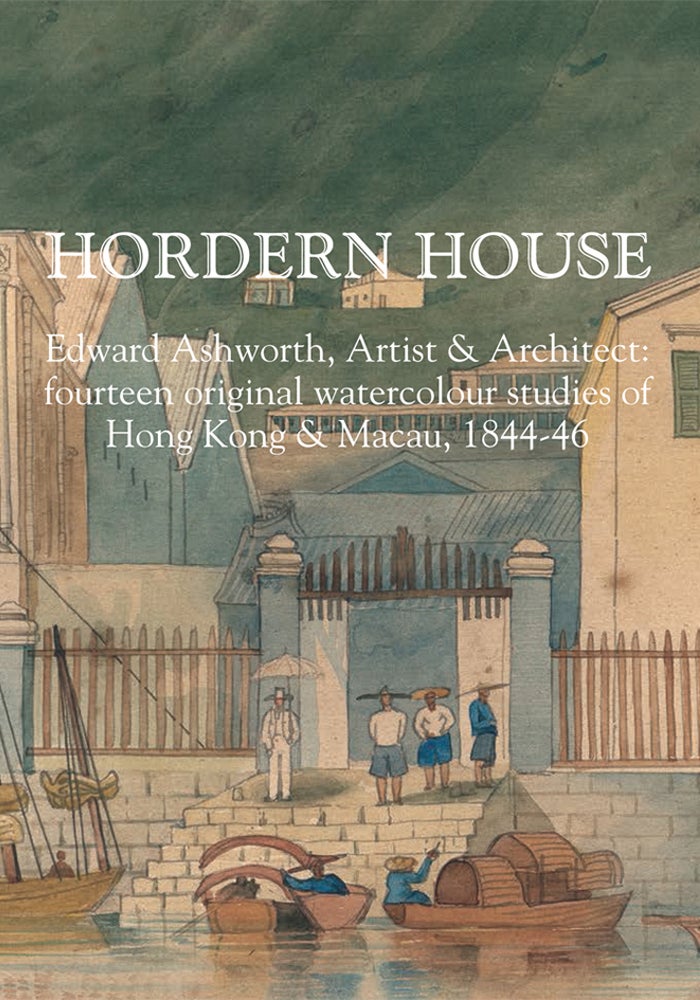
An important collection of fourteen original watercolour studies of Hong Kong & Macau, painted by the travelling English architect Edward Ashworth in the mid-1840s, just after the first Opium War and at the very beginning of Hong Kong's first colonial buildng boom. These drawings represent an exceptional documentary archive, sometimes the only recorded images of certain buildings or streetscapes. Ashworth's important article "Chinese Architecture" of 1851 reproduced a few of these images as lithograph plates.